
Wired at Night, Exhausted by Day: How Cortisol Disrupts Sleep
By Dr. Amy | Health Solutions Wellness | November 1, 2026
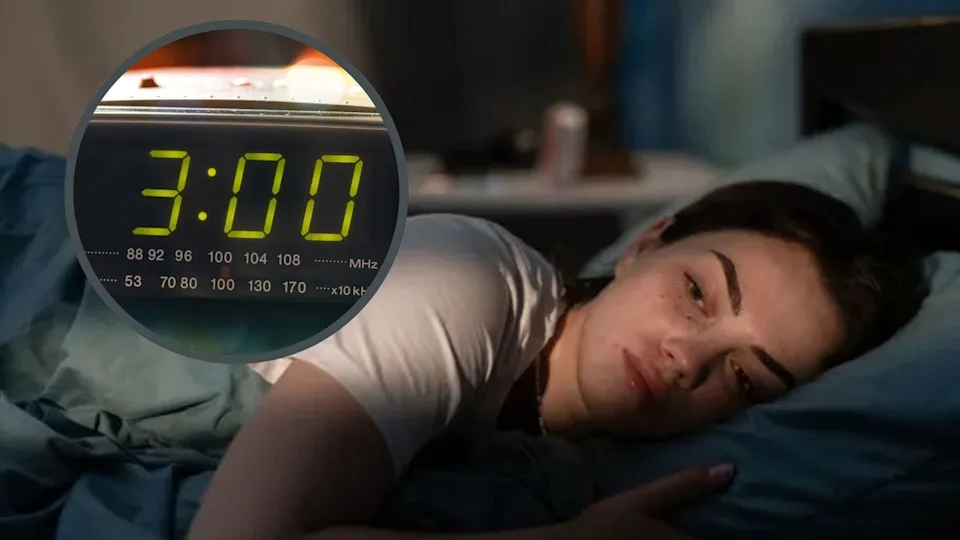
You fall asleep fine. Then 3 a.m. hits. Your eyes pop open. Your heart feels fast. Your mind is already running tomorrow’s to-do list.
You told your doctor. Your labs came back “normal.” Maybe someone said, “Try melatonin.” You did. You still wake up wired, then drag through the day.
I hear this story every week. It is not in your head. Often, it is a cortisol rhythm that has slipped out of sync. In this article, I explain how functional medicine cortisol and sleep testing works. I also explain what you can do now.
The timing matters. Clocks fell back an hour on November 1. If your sleep was already shaky, this week may feel rough.
Why Do I Wake Up at 3 A.M. Feeling Wired?
Waking up wired often points to high cortisol at night. Cortisol is your main stress hormone. It should be high in the morning and low at bedtime. When it stays high at night, your brain stays on alert.
This is common. About one in three U.S. adults sleeps less than seven hours a night.1 Poor sleep is not rare. But the cause is often missed.
Sleep and your stress system affect each other.2 Stress can break up your sleep. Broken sleep can then raise your stress hormones. It becomes a loop.
Research shows this link. In one classic study, adults with chronic insomnia had higher cortisol and ACTH levels. The rise was most clear in the evening and early sleep.3 Another study found that lost sleep can push cortisol higher the next evening.4
In my practice, I see this loop often. A patient I will call Jen (a composite, with details changed) was 41. She woke at 3 a.m. almost every night. Her routine labs looked fine. Her cortisol curve told a different story. It was low in the morning and high at night.
Here are the signs I hear most. You feel tired at 10 a.m. but wide awake at 10 p.m. You crave sugar or salt in the afternoon. You wake between 2 and 4 a.m. and cannot fall back asleep. You feel anxious at night for no clear reason. Any of these can point to a rhythm problem.
Key Takeaway: Waking at 3 a.m. feeling wired can signal a cortisol rhythm that is high at night. It is worth testing, not guessing.
How Does Cortisol Control My Sleep-Wake Cycle?
Cortisol follows a daily rhythm. It peaks 30 to 45 minutes after you wake. Scientists call this the cortisol awakening response.5 It helps you feel alert and ready for the day.
Cortisol then falls through the afternoon. By bedtime, it should be low. That drop lets your body shift into sleep mode.2
A flat morning rise can leave you groggy and foggy. A high evening level can keep you up. Sleep researchers link sleep quality to this morning rise.5
Blood sugar and metabolism are tied in too. In one study, healthy young men slept only four hours a night for six nights. Their evening cortisol rose. Their blood sugar control also got worse.6
I often see a flipped curve in the clinic. Patients feel tired in the morning and wired at night. Many use the phrase “tired but wired.” It fits what the lab shows.
Key Takeaway: Healthy cortisol is high in the morning and low at night. A flipped pattern can wreck both sleep and energy.
Why Does the Time Change Make Sleep Worse?
The time change shifts the clock on your wall. It does not shift your body clock. That clock runs mostly on light.
The American Academy of Sleep Medicine supports permanent standard time. Its position statement points to health risks tied to clock changes.7 Circadian scientists make a similar case. They argue that standard time fits our body clocks better.8
Light is the key signal. Bright light in the morning helps set your rhythm. Bright light late in the evening can push it later.9 After “fall back,” mornings get brighter and evenings get dark early. That can help some people. It can confuse others.
Most healthy adults adjust in a few days. But a cortisol rhythm that is already fragile may not bounce back as fast. Patients with this pattern often tell me the clock change hits them harder.
Key Takeaway: A clock change is a small shock. If your stress rhythm is already off, it can feel like a big one.
What Keeps Cortisol High at Night? A Raleigh Functional Medicine View
Stress is the usual suspect. But it is rarely the only one. Here is what I look for in my Raleigh, Cary, and Apex patients. This list comes from my clinical experience.
- Blood sugar swings. Skipped meals or late sugar can set off a night-time stress response.
- Hormone shifts. Falling progesterone in perimenopause can make sleep lighter.
- Thyroid imbalance. Thyroid problems can show up as racing nights and tired days.
- Hidden triggers. Mold exposure, gut infections, or chronic inflammation can keep the body on alert.
- Daily habits. Late caffeine, alcohol, and bright screens in the evening all play a role.
This is why one supplement rarely fixes the problem. You have to find which piece is driving it. That is the heart of root cause medicine.
I also want to be clear about something. Insomnia can have many causes. Sleep apnea, depression, and medicines can all play a role.
Key Takeaway: High night-time cortisol is a symptom, not a diagnosis. The goal is to find what is driving it.
Can Hormones and Thyroid Change How I Sleep?
Yes, in my clinical experience they can. Your stress hormone does not work alone. It shares a loop with your thyroid and your sex hormones. When one piece shifts, the others often follow.
Take perimenopause. Progesterone helps calm the brain at night. When it drops, many women wake at 2 or 3 a.m. Night sweats can add to the problem. Their doctors may call it “just stress” or “just aging.” I call it a clue.
Thyroid shifts matter too. An overactive thyroid can feel like a racing mind at night. An underactive one can leave you wiped out by day. Many patients have a mix of both signals.
I think of it as a three-way street. Cortisol, thyroid, and sex hormones all talk to each other. If we only look at one, we miss the pattern. That is why I like to look at the full picture.
Key Takeaway: Sleep problems often involve more than one hormone system. Looking at them together gives better answers.
How Do You Test Cortisol When Sleep Is the Problem?
A single morning blood draw shows one moment in time. Cortisol moves all day long. So one number can miss a flipped pattern.
In functional medicine, we often map the whole day. We may use a four-point saliva test or a dried urine test like the DUTCH. These show your cortisol curve from morning to night.
Let me be honest about the limits. Some experts debate how well these tests guide care. Conventional endocrinology has its own tools. For example, a late-night saliva cortisol test helps screen for Cushing’s syndrome.10
We look at it next to your sleep history, symptoms, and other labs. The test is one piece of the picture.
Back to Jen. Her curve showed the night-time spike. We also found swings in her blood sugar and signs of perimenopause. Her plan was not one pill. It was a few small changes, done in order. Within weeks, she told me she was sleeping through more nights. Every patient is different, and results vary.
Key Takeaway: Mapping cortisol across the day shows more than a single blood draw. Always rule out adrenal disease first.
What Can I Do This Week to Sleep Better?
You do not need to wait for testing to start. These steps are simple and safe for most people.
- Get outside within an hour of waking. Morning light helps anchor your body clock.9
- Keep a steady wake time, even on weekends.
- Stop caffeine by noon. Give it time to leave your system.
- Eat protein at breakfast. Aim for steady blood sugar through the day.
- Dim the lights after sunset. Put screens away an hour before bed.
- Build a wind-down routine. Try a warm shower, light stretching, or a book.
Key Takeaway: Light, timing, and steady blood sugar are the free tools. Start there while you look for the root cause.
Frequently Asked Questions
Can high cortisol cause insomnia?
Yes, it can. Research shows adults with chronic insomnia often have higher cortisol, especially in the evening.3 High cortisol keeps the brain alert when it should wind down.
Why do I wake up at 3 a.m. every night?
Many things can cause it. Stress hormones, blood sugar drops, and hormone shifts are common ones. A functional medicine cortisol and sleep workup can help sort out which one fits you.
What is the best test for cortisol and sleep problems?
No single test fits everyone. A four-point saliva test or a DUTCH test maps your cortisol across the day. We rule out adrenal disease first, then use the curve to guide your plan.
Does the time change really affect cortisol?
Clock changes can disrupt your body clock, which runs on light.7 9 Direct cortisol effects vary by person. If your rhythm is already fragile, you may feel it more.
Is “adrenal fatigue” real?
Adrenal fatigue is not a recognized medical diagnosis. But a stress system out of rhythm is real. We call it HPA axis dysfunction. It is a useful way to think about “tired but wired.” We test before we label.
Can melatonin fix a cortisol problem?
Melatonin helps some people with timing. It does not address why cortisol stays high at night. Find the driver first, and talk to your provider about dosing.
How do I get help with cortisol and sleep in Raleigh, Cary, or Apex?
Book a discovery visit with us at Health Solutions Wellness. We will review your history and talk through testing options. Call (984) 381-0653 or visit healthsolutionswellness.com.
Ready to Find Your Root Cause?
You have been tired for a long time. You deserve real answers. You deserve more than another “try melatonin.” If this sounds like you, we are here when you are ready.
A discovery visit is a calm first step. We listen to your story. We look at your sleep, stress, hormones, and labs together. Then we map out a plan that fits your life.
We serve patients across Raleigh, Cary, Apex, the Triangle and the coast of NC.
Phone: (984) 381-0653
Website: healthsolutionswellness.com
References
1. Liu Y, Wheaton AG, Chapman DP, Cunningham TJ, Lu H, Croft JB. Prevalence of Healthy Sleep Duration among Adults — United States, 2014. MMWR Morb Mortal Wkly Rep. 2016;65(6):137-141. https://doi.org/10.15585/mmwr.mm6506a1
2. Balbo M, Leproult R, Van Cauter E. Impact of Sleep and Its Disturbances on Hypothalamo-Pituitary-Adrenal Axis Activity. Int J Endocrinol. 2010;2010:759234. https://doi.org/10.1155/2010/759234
3. Vgontzas AN, Bixler EO, Lin HM, et al. Chronic Insomnia Is Associated with Nyctohemeral Activation of the Hypothalamic-Pituitary-Adrenal Axis. J Clin Endocrinol Metab. 2001;86(8):3787-3794. https://doi.org/10.1210/jcem.86.8.7778
4. Leproult R, Copinschi G, Buxton O, Van Cauter E. Sleep Loss Results in an Elevation of Cortisol Levels the Next Evening. Sleep. 1997;20(10):865-870. https://doi.org/10.1093/sleep/20.10.865
5. Elder GJ, Wetherell MA, Barclay NL, Ellis JG. The Cortisol Awakening Response — Applications and Implications for Sleep Medicine. Sleep Med Rev. 2014;18(3):215-224. https://doi.org/10.1016/j.smrv.2013.05.001
6. Spiegel K, Leproult R, Van Cauter E. Impact of Sleep Debt on Metabolic and Endocrine Function. Lancet. 1999;354(9188):1435-1439. https://doi.org/10.1016/S0140-6736(99)01376-8
7. Rishi MA, Ahmed O, Barrantes Perez JH, et al. Daylight Saving Time: An American Academy of Sleep Medicine Position Statement. J Clin Sleep Med. 2020;16(10):1781-1784. https://doi.org/10.5664/jcsm.8780
8. Roenneberg T, Wirz-Justice A, Skene DJ, et al. Why Should We Abolish Daylight Saving Time? J Biol Rhythms. 2019;34(3):227-230. https://doi.org/10.1177/0748730419854197
9. Blume C, Garbazza C, Spitschan M. Effects of Light on Human Circadian Rhythms, Sleep and Mood. Somnologie. 2019;23(3):147-156. https://doi.org/10.1007/s11818-019-00215-x
10. Nieman LK, Biller BMK, Findling JW, et al. The Diagnosis of Cushing’s Syndrome: An Endocrine Society Clinical Practice Guideline. J Clin Endocrinol Metab. 2008;93(5):1526-1540. https://doi.org/10.1210/jc.2008-0125
11. Qaseem A, Kansagara D, Forciea MA, Cooke M, Denberg TD. Management of Chronic Insomnia Disorder in Adults: A Clinical Practice Guideline From the American College of Physicians. Ann Intern Med. 2016;165(2):125-133. https://doi.org/10.7326/M15-2175